Subscribe to Brandcasting on YouTube and find full-length audiograms for each episode we release.
Branded podcast production agency for B2B content marketing
Subscribe to Brandcasting on YouTube and find full-length audiograms for each episode we release.
The Electrical Safety Authority has mastered the art of communicating highly technical information with this podcast for electrical contractors and electricians.
Producer and host of the Recovery Unscripted podcast David Condos Tjornehoj explains how to use storytelling in a way that’s interesting, memorable, and digestible for the listeners.
In the best podcast interviews, hosts and guests connect with ease. The conversation flows. Each interaction seems effortless. But, in reality, a lot of hard work goes into making meaningful and comfortable conversation during interviews.
David Condos, podcast producer and host of Recovery Unscripted, approaches each episode he hosts with one foundational question:“How can I make my guest as comfortable as possible?”
“To guide guests well, to ask great questions—the best way to do that is to really be listening and be present with them,” he said. “If they can tell that you’re invested in that time, in what they’re saying and go on that journey with them.”
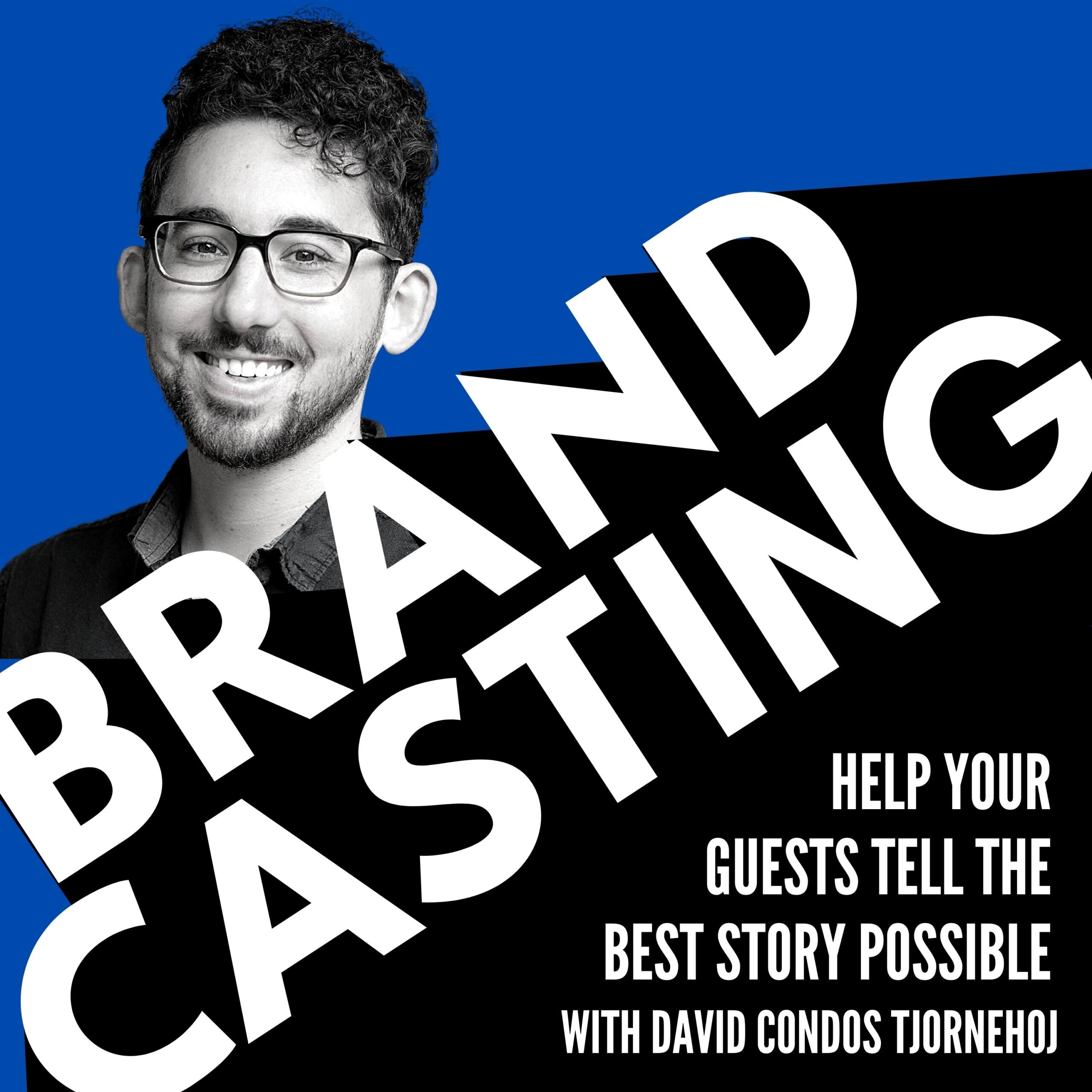
In this episode of Brandcasting, we sat down with Condos to explore the ins and outs of podcast hosting. We’ll talk about what goes into a successful podcast interview, tips for keeping guests on track and how to be a connective host.
A good interview brings listeners new insights. Before Condos begins an interview, he curates his questions to uncover something original and thought-provoking to share with his audience.
“You want something that feels new and fresh,” he said. “You want to shine a light on something that’s maybe an under-covered topic or guest.”
For an interview to be effective, however, ensuring that listeners can follow the story being told is just as crucial as the story itself. The best podcast interviews are crafted with the listeners in mind.
“You want people to connect and part of that is not leaving them behind, being thoughtful of [the listener] during the creation process,” Condos explained.
Condos advises podcasters to think about what listeners will need to know in order to understand what the guest is sharing. Make sure you’re bringing as much context as you can into the interview — especially for guests with complex expertise.
“Approach it as if the listener really doesn’t know what the guest is talking about,” he said.
Podcast hosts shouldn’t be shy about asking guests to clarify or elaborate on intricate topics. By having guests slow down and connect the dots for listeners, your podcast episode will leave your audience informed rather than confused.
“You want to create a piece that’s going to be interesting, going to be memorable,” he emphasized, “but also going to be digestible for the listener.”
As an interviewer, your goal is to provide a framework through which guests can share their stories.
“My job is to set you up to talk about what you’re passionate about, what you’re an expert in,” Condos said.
One of the first challenges is to help guests feel comfortable. If you don’t take the time to help guests relax into the recording setting, their nerves may get in the way of their story.
“A lot of these people, at least in my experience, have never been interviewed before,” Condos said. “You want them to forget that they have headphones on, that there’s a mic in front of their face, and just share their story, because that’s going to be the meaningful stuff.”
In order to guide a conversation effectively during podcast interviews, it’s crucial to know the terrain. The best interviewers come to an interview having done their research.
“Beforehand, as much as I can, I research so I at least know some of the places where I want to guide them, then the more quickly we’ll get to talking about the meat,” Condos said.
Preparation allows interviewers to make storytelling decisions on the fly, steering guests toward a particular topic or allowing a question to breathe.
“When you’re prepared,” he emphasized, “then you have the ability to make those decisions about what’s right.”
In order to get engaging and thoughtful podcast interviews, your guest needs to be able to trust you with their story. For Condos, building this trust starts long before you sit down for the interview.
“In the days leading up to the interview, make sure your communication is good, making sure you address any questions or lingering concerns,” said Condos. “So that they know what to expect.”
Setting clear expectations for your guest will help calm some of the pre-interview nerves or jitters. That way you are able to clear up any misconceptions your guest may have about podcast interviews.
“One thing that seems really big for helping people is making 100% clear that this is not radio. It’s not live, it’s not streaming out to the world as you’re saying it,” Condos explained.
Once your expectations are clear and you’ve done everything you can to make your guest feel more comfortable, you can unlock emotional depth in your conversation — making your episode engaging and worthwhile for listeners.
“All these things maybe take a little extra work and a little extra prep, but it is in your interest as an interviewer, it’s your interest for the listener,” said Condos. “Because these guests, they have their expertise, their story to tell, their lived experience. And that’s the whole point of what you’re doing: trying to get that and get it out there.”
Don’t miss a single episode! Follow Brandcasting wherever you get your podcasts and for more content like this, subscribe to our newsletter. Ready to build your own branded podcast? Let us help you get started with a free consultation.
David Condos: It’s not necessarily bad for the conversation to go off track. That can be some of the best stuff. If it’s unexpected, it’s not necessarily where I want it to go, but that can be awesome and unexpected and a great pleasant surprise. But if I’m not prepared, then I’m not even really going to know when it’s going off track in a bad way, or when it’s going off track in a good way.
Clark Buckner: That’s David Condos. He’s a podcast producer, host, and he’s a really good interviewer. He is a pro at creating engaging, digestible, and memorable stories that help make critical topics accessible to the general public. You’re going to hear him share how he prepares his guests to ensure their story is heard, in particular, through the perspective of the audience. David also explains how to conduct a great podcast interview, ensuring your guest shares their best insights and stays on topic during the conversation.
Clark Buckner: Welcome to Brandcasting with Relationary Marketing. The show all about how to build a professional branded podcast that delivers on your business’ goals. I’m your host Clark Buckner, partner and co-founder here at Relationary, a turnkey podcast production agency for B2B content marketing. We help brands and agencies create engaging content to establish thought leadership, nurture key relationships and promote events. For a recap and transcript of this episode and to download our free five step guide to building a branded podcast, head on over to relationarymarketing.com/podcast. All right, let’s jump in.
David Condos: I’m a podcast producer, host, interviewer based in Nashville, Tennessee.
Clark Buckner: David, thanks so much for hanging out with us. We’re here in the studio and we’re going to be talking a little about interviewing and some of the things that we’ve both learned along the way. I really want to hear your perspective. There’s not many people I’ve met who have an experienced doing podcasting in the healthcare space, you check that box. Doing podcast hosting at conferences, you check that box as well. And a lot of really interesting perspectives you have. So I think we just jump right in. How about we start off just a quick snapshot of how did you get into this stuff? Why podcasting? Take me back, rewind it back.
David Condos: Yeah. So the avenue for me was music and it allowed me to do some really cool stuff. I went to Belmont here in Nashville, got to tour the country. I was really, really fortunate. But then a few years ago, getting older, I’m married, our son was born in 2015 and music is hard. Nashville might be the best place in the world to make it happen, but it’s still hard to make that a sustainable career with a family and all that. And so I had this opportunity in 2016 to start doing a podcast. I had no experience doing podcasts. I’d always done pretend interviews. So I felt like I had. “Okay, I can do that.” I’m talking about as a kid with a tape recorder or a camcorder or something. But the thing that really convinced my boss at the time who had the idea of starting this podcast was that I had the audio side from music.
David Condos: And so I know how to work with the mics and know how to do digital audio editing, mixing, that kind of thing. And that opportunity came up and I jumped on it and then right away it just seemed like a really cool marriage of the storytelling interviewing side, and then the artistic creative expression producing something, creating something side that I had grown to love and had a lot of experience, with music. And so that was just being at the right place the right time. Yes, that was 2016 when podcasting was starting to become more of a thing. So it’s been a really cool time to be a part of that and to really see it as a career, as a field, as a thing that more and more people are catching onto.
Clark Buckner: I love it. And I’m so glad you got into it. You’re really good at what you do. So how about next. Let’s talk about some of the things you’ve learned along the way. So what makes a good podcast interview? I think that might be a good place to start here.
David Condos: Yeah. Hopefully I would say something that feels like new and fresh, covers something that is… You’re covering it in a different way. You’re shining a light on something that’s maybe under-covered topic or a guest, whatever it may be. You create a piece that’s going to be interesting, going to be memorable, but also going to be digestible for the listener because like for me, I’m talking about some of the healthcare stuff. So there’s some stuff that if you’re working in that field, you’re going to get it right away. But there’s some stuff that I think would still be interesting for the average listener, but we need to make sure that we’re approaching it in a way that’s going to be digestible.
Clark Buckner: Digestible. So is that length, is that topic? How do you take complex topics and try to make them more understandable, more digestible, more transferable?
David Condos: Yeah. Some of that is I would say is length. That’s one simple way. Another way is just to, and this is easy for me because I’m not a super expert on a lot of these topics, is to approach it as if the listener really doesn’t know what they’re talking about. And so if they use an acronym saying like, “Okay, and that’s the, what is such and such.” Or having them clarify what those connecting the dots are, what those pieces are to make sure that everybody can get caught up and you’re not just ripping off jargon. I mean, you want people to connect and that’s… Part of that is not leaving them behind. Being thoughtful of them during the creation process, thoughtful of the listener. Yeah.
Clark Buckner: So as you think more about this creation process, you have to have a guest that is comfortable, but you can also feel…if you’re interviewing a guest and either they’re distracted or maybe they’re just really nervous or whatever, that transfers pretty clearly through just listening to someone. So how much of it do you know normally try to get your guest comfortable? Do you have any tips that have that worked really well, especially if you’re interviewing someone who’s not used to being interviewed.
David Condos: Yeah. Yeah. Yeah. And that’s something I encounter a lot in my experience. And so some of the time I’ll be interviewing people who have been interviewed a bunch. So like politicians, CEOs, authors, people like that.
Clark Buckner: What’s an example that you’ve talked to you? About guests you’ve had like a politician [crosstalk 00:06:42]
David Condos: Like Chris Christie, like Glennon Doyle’s an author.
Clark Buckner: Okay. You compare that against people who’ve not been interviewed.
David Condos: Yeah. So there’s that. And so, the challenge with the former is kind of nudging them off their talking points, trying to make them like stop and think about something in a different way. But yeah, then, like you said, the other side of it is a lot of these people, at least in my experience have never been interviewed before. Their [crosstalk 00:07:18]
Clark Buckner: Nonetheless [crosstalk 00:07:20]
David Condos: Yeah, physically afraid of the microphone. And so that’s obviously whole another challenge and that’s where part of my job in that setting is to make sure they feel comfortable. And so I would say some tips like when people put microphones on and they hear their voice…
Clark Buckner: The headphones?
David Condos: Oh, yeah. They put the headphones on, I’m sorry. And they hear the voice in the microphone that is very unsettling for a lot of people. And so, in those moments you can be mitigating that by having them put on the headphones right away. And so they can hear it as I’m finishing, setting up. And then, after a couple minutes of that, we transition it into the conversation. Kind of like we’re just doing here where you don’t really notice. There’s not like a director’s thing slaps. And it’s like, “Okay, now it’s interview time.”
Clark Buckner: Lights flip on and everything.
David Condos: Yeah. And so you try to make it as seamless translation as possible. So where it’s, they kind of forget that the microphone is there. I would say another thing is stuff that you can do like before the interview starts. So like in the days leading up to it, making sure the communication is good, making sure if they have any questions, if they have any lingering concerns, so that they know what to expect, they know like how it’s going to get laid out. And even if I haven’t talked with them in the days leading up to it, I’ll explain that, when we sit down, it’s kind of like, “Oh this is how it’s going to go. And it’s going to be, we’re talking about things that you’ll want to talk about. My job is to set you up to talk about what you’re passionate about, what you’re an expert in.” And so just kind of like helping them feel ready.
Clark Buckner: That’s a good point. It comes from the prep, we call it step two, the prep slash invite. And we kind of take it case by case. Sometimes we’re sending guests more of the questions in advance. Sometimes we don’t send that much in advance. Our experience has been if, definitely if there is some kind of anxiety, sending them some questions just so they can, “Okay, Alright, I can do this” but sometimes we keep it casual too. So either way, I think you got to feel it out. Right?
David Condos: Right. Yeah, And I definitely, a lot of people don’t care. Like they don’t want questions ahead a time. Cause you
Clark Buckner: I love that you brought some notes that you prepared, but you’re not reading from anything. That’s what you want to avoid is setting someone up where they feel like they’re coming in with a script that they’re reading. That is just game over.
David Condos: Yeah. And I’ll say one other thing that seems to be really big for helping people, is making it a 100% clear that this is not radio because I think that’s….
Clark Buckner: And what do you mean by that?
David Condos: I mean, it’s not live. It’s not like streaming out to the world as you’re saying it, because I think that really makes people [crosstalk 00:09:57]
Clark Buckner: I love that. It’s such a good tip. This is not live. This is easily edited. I can visually see someone just deflating and finding more comfort.
David Condos: Yeah.
Clark Buckner: And it also helps that we don’t use video for this stuff.
David Condos: Sure. Yeah, yeah, yeah. That’s another big hurdle that you don’t have to worry about with audio.
Clark Buckner: Definitely.
David Condos: But yeah. I mean, the thing is you want them to feel comfortable. So like all these things are, maybe takes a little extra work, a little extra prep, but it’s in your interest as the interviewer, producer, it’s in your interest for the listener because these guests, they have their expertise, they have their story to tell, they have their lived experience. And that’s the whole point of what you’re doing is trying to get that and get it out there.
Clark Buckner: Cool. So one of the ways we’ve been rolling with our podcast is we like to play different clips just from our archives to add context and add a little bit of texture to all of our conversations. So I’m going to play something here and then we’ll keep this conversation going around, being comfortable and getting your guests to be comfortable.
Speaker 3: We interview mostly entrepreneurs. There are so many layers of defense and so many layers of, I need to present as having it all together all the time, because literally my dinner is on the line. If I don’t get this investment or I don’t close this customer, close this sale, see people have to really present and like have their talking points in order. So a lot of what do to get to that beginning, middle, end, and also to get to people to get to the emotional vulnerability or selective vulnerability in a lot of cases to get to that place where it’s a story people want to listen to. We have to spend a lot of time with them and ask questions that kind of catch them off guard, but also give them the opportunity to be like you don’t actually [inaudible 00:11:35]
Clark Buckner: So that was recorded at Nashville Podcast Day. It was here at the Entrepreneur Center, Nashville Entrepreneur Center. And you can come to our podcast meet up. And when I say our podcast meet up, it’s a meetup for the community by the community. Nobody makes any money. And I’m one of the organizers of that. And so that was at our big podcast day. So Brynn is talking about finding this place of emotional vulnerability. So any thoughts come to mind of like that idea of emotional vulnerability?
David Condos: Yeah. I think that’s definitely the goal. That’s where you want to get, and that’s why you want to clear as many obstacles as you can, clear the runway so that they’re not thinking about the mic. They’re not thinking about, “Oh, what if I say the wrong thing? Is this live?” That’s a big part of it. And like I was just saying just, you want them to forget that they have headphones on, that there’s a mic in front of their face and just share their story, because that’s going to be the meaningful stuff.
Clark Buckner: What I’ve noticed before, especially at these conferences where it feels like I’m just going nonstop with these interviews and a trend I’ve seen, or a theme I’ve seen over the years is just how much the guest is relying on you, the interviewer, the host. They’re looking to you for everything to be comfortable, to be given permission, to relax, to breathe, just to put their tension at the side. And it’s interesting because I’ve even noticed where I have on my right, I have my little recorder and I’m hitting record there. And so when I look to the right to adjust it, their eyes follow, or if I look the other way, they follow. It’s like they really are looking to the interviewer as this, like this lead basically. And the host needs to feel really comfortable because if you’re uncomfortable with the gear you’re using or uncomfortable with what you’re talking about, that energy will transfer onto them.
David Condos: Hmm. Yeah. They’re taking their cues from you. You’re their guide on this journey. Yeah.
Clark Buckner: That is the perfect segue to talk about. How do you guide guests and keep them on track with the topic?
David Condos: Yeah. A lot of that comes back to the preparation like we were talking about before they even sit down, you can do a lot of things that they’re not necessarily going to know everything you did, but then it makes everything roll.
Clark Buckner: Oh, I’m curious.
David Condos: And so beforehand as much as I can research and at least know some of the places where I want to guide them.
Clark Buckner: Okay.
David Condos: Then the more quickly we’ll get to really get to where we want to go. Like generally in my experience they’ll feel it. Or sometimes they’ll even comment like, “Oh wow, you must have like researched this thing” or whatever it is. And I feel like that helps build trust because I’m not saying like, “Oh, I’m on your level talking about some therapy or some counseling technique or medical term” or whatever it is.
David Condos: But if I can feel like, “Okay, well, you’re free to talk about it to your level of expertise.” And I’ve put in some work to kind of create a framework like you were saying to where this is hopefully a conversation that you feel like is worth your time. It’s not necessarily bad for the conversation to go off track, like that can be some of the best stuff. If it’s unexpected, it’s not necessarily where I want it to go, but that can be awesome and unexpected and a great pleasant surprise. But if I’m not prepared, then I’m not even really going to know when it’s going off track in a bad way or when it’s going off track in a good way, if that makes sense.
Clark Buckner: That’s a good point.
David Condos: And so, yeah, as far as like actually guiding them back, a couple things would be like if they are starting to jump ahead, that’s one way I see things go off track and I have to guide them back.
David Condos: If they’re jumping ahead to something that we’re or I’m planning to have them dive into later in the interview, then I can say like, “Okay, well”… I know I’m going to be editing it anyway. So I’ll just say like, “Hey, we’re going to dive into that later.” So we can save that for a minute from now. So that’s one way, just so we don’t have to do extra editing or make them come back to it.
David Condos: If they’re going off in a direction that I just don’t think is going to be relevant or is going to be something that we end up keeping, I would say just try to like be ready to jump in whenever there’s any kind of pause and either draw them back to the last relevant thing they said and have them, “Hey, a minute ago you said this one thing, can you expand on what you were talking about there?” to pull them back into that track. Or if that’s not an option, then just try to bridge as best you can into the next thing you want to talk about. It’s delicate, especially, we’re talking about they’re relying on you for their cues, they might be in an uncomfortable setting. And so you don’t want to, you make this abrupt cutoff where you have the risk of kind of deflating their confidence. It’s still good to be in control and when you’re prepared, then you have the ability to make those decisions about what’s right.
Clark Buckner: I like that. I sometimes have found that by just letting it breathe, they might come back and keep talking. They might have something else… [crosstalk 00:16:52]
David Condos: Yeah, absolutely. Yeah. And so if you, I mean, silence is uncomfortable. And so if you’re okay with that, then chances are, you’re going to be more okay with it than your guest is. And so if you want them to keep talking, like, if you’re like, oh, they’re kind of getting into something here that they would be okay leaving it at that. But you want to go a little bit deeper into what they’re starting to get to then, yeah, I would say using silence is a great way to kind of without saying like, “Oh, let’s keep talking about that.”
Clark Buckner: A moment of silence.
David Condos: Yeah, making them just uncomfortable enough to where they feel like keep talking.
Clark Buckner: I think I kind of visualize that as leaving the door open.
David Condos: Yeah.
Clark Buckner: Letting them share what is on their mind, what is on their heart. So I wanted to ask you next, any tips you have for asking great questions during an interview or getting good responses. And I kind of want to keep this dialogue going around, like yeah, that idea of emotional vulnerability, like one of the ways to end interviews is always ask, is there anything else on your mind or is there anything else on your heart, because to me at least, it seems that it’s indicating something more emotional versus just, is there anything else left on the checklist? So as we’re talking about this emotional vulnerability, do you have any tips of ways that you ask questions or yeah. Anything along those lines?
David Condos: Yeah. Yeah. So I think the cool thing about having these conversations around mental health addiction recovery is that emotional vulnerability is like built in. And so it’s not something that you really have to like manufacture a bunch of emotion around. And so as the interviewer, you know, I want them to feel comfortable so that they can get to that place. And so often I’ll structure it to where I’ll start out pretty open ended, like how you asked me, say like, “You know, just, how did you get here? What’s your story? What’s your journey?” And they can take that wherever they were want, or say as much, or as little as they want. But I feel like that’s a good way to kind of ease into it, to be like, okay, everyone should have something to say to that question. That’s not like a real stumper. And so the one cool thing that I’ve found is that, sometimes you’ll have people with their emotionally open just right off the bath and they’ll dive into some story, where’s something happened to them or their family and they’ll start crying like right off the first question.
Clark Buckner: You have a pretty heavy set of topic you’re talking about.
David Condos: Yeah, sure. Yeah, yeah. Yeah. I mean, like we have, that’s what it is. I want them to feel comfortable to share or not share as much they want because some of these people are in recovery themselves. Some of these people have family who are in recovery. Some of these people have a traumatic incident from their past that, there’s never going to stop being part of their process that they’re working through. And so, one thing that I’ve found is that for the people who maybe aren’t as open right off the bath, kind of like what you said, I’ll bring it back around at the end. So after we’ve had this whole conversation and hopefully built a little bit of rapport, a little bit of trust, then I’ll bring it back around and ask one of those more emotional questions again, pretty open ended toward the end of the interview.
David Condos: So you’re doing this certain thing that your mission is, why are you doing that? Why is this important to you? That kind of thing. And that can, hopefully that that’ll be the peak of how comfortable they are during the interview, is toward the end when we’ve kind of hopefully built that trust and kind of gone on this little journey of conversation’s [crosstalk 00:20:39]
Clark Buckner: That’s a good point. Yeah. Wow. Building trust. You were talking a moment ago about story. I like the idea of past, present, future as a framework for interviews because there’s story baked into that story arc right there. Every story is a past present and usually a future. And so I definitely like that. We’d like to also talk about trends, challenges, solutions, if it’s more of like a B2B space, but you can still transfer that into story. Trends, challenges, you know what the pain points are.
David Condos: Yeah. What’s the next big hurdle you see for the industry for yourself, that kind of thing. Yeah.
Clark Buckner: Alrighty. This has been so much fun. You are like the perfect guest to have on this and I’ve learned from you. I’m so glad that we get to work together here at Relationary and you’re doing great work in your life, at your job and just a great guy. So anything you want to leave us with? Anything else we’ve not touched on before we wrap up?
David Condos: Yeah. So I would say the last big thing for how to do a great interview, how to do great questions, is to try to listen. And I think that’s an easy thing to forget or…
Clark Buckner: What were you saying?
David Condos: An obvious thing.
Clark Buckner: Okay. So, that was such a terrible [crosstalk 00:21:50]
David Condos: Exactly.
Clark Buckner: But listen.
David Condos: Yeah. So you want to listen, you want to be present in the moment as much as you can. And I know that can be a challenge. A lot of podcasters are solo and so you’re working, you’re worrying about the levels, you’re about the recording, you’re worrying about what’s the next thing I’m going to ask. Is the conversation going off track? But yeah, I think ultimately to guide them well, to ask great questions. The best way to do that is really be listening and be present with them because that’ll help their vulnerability as well. If they can tell that you invested in that time, in what they’re saying and go on that journey with them. And then this loops back around to the preparedness because when you’re prepared going into the interview, then you are able to have that ability to be more free during the interview and just be present and listen and go where the conversation takes you.
Clark Buckner: That was just warm buttery smooth, great advice, man. I love that so much.
David Condos: Thanks Clark.
Clark Buckner: Thank you for hanging with us. What’s a good way if I just want to connect with you and learn more about your story and keep the convo going?
David Condos: Yeah. So my main connection with social media is Twitter. And so that’s @DavidCondos, C-O-N-D-O-S for me. The podcast that I referenced earlier that I’ve done for the last couple years is called “Recovery Unscripted.” And you can find that on all of your podcast apps. So Yeah.
Clark Buckner: Thank you.
Clark Buckner: Hey, thanks so much for listening to Brandcasting with Relationary Marketing. We’re a turnkey podcast production agency for content marketing. And we’d love to hear from you. For a recap and transcript of this episode and to download our free five step guide to building a branded podcast, visit relationarymarketing.com/podcast. And if you enjoy this content, please follow, rate, and review the show wherever you get your podcasts. We’ll see you next time.
Clark Buckner: Brandcasting is a production of Relationary Marketing. This episode was produced by Darcy Mack and executive producers, Clark Buckner, me and Chuck Bryant with editing support from Dylan Carrow and music by Jess Grommet. Additional production support is provided by Anthony Luciani, AJ Meyers, Riley Wallace and Jasmine Meriweather.
Publishing podcast episodes on YouTube gives your show new opportunities for discovery and growth.